Raymond: A Ghostly Alphabet Font for Spooky Seasonal Designs
When it comes to creating visually engaging content for Halloween or any spooky-themed project, typography plays a crucial role in setting the right tone. One font that stands out in this regard is Raymond, a ghostly alphabet punctuation font that brings a unique blend of eerie charm and playful design to your creative projects. This article explores how Raymond can enhance your seasonal designs and why it's a valuable addition to your design toolkit.
The Unique Characteristics of Raymond
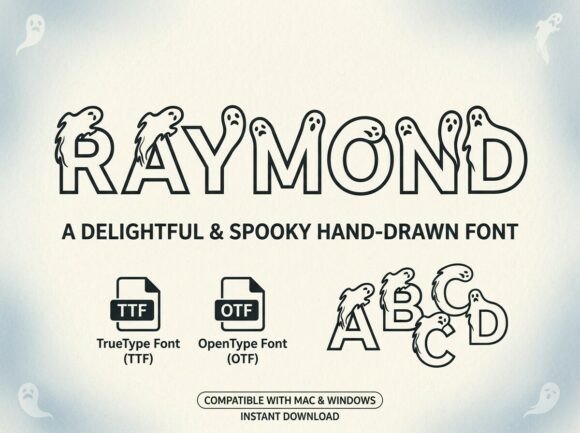
Raymond is more than just a font—it’s an experience. Each character in the alphabet is designed with spirited specters floating around them, giving the text a haunting yet whimsical appearance. The bold, rounded letterforms are accented by expressive, floating ghosts that add a dynamic visual element to any text they accompany.
This font features a wide range of characters, including uppercase and lowercase letters, numbers, and punctuation marks, making it versatile for various design applications. The combination of these elements ensures that Raymond can be used effectively across different platforms and mediums, from print to digital.
Design Elements That Make Raymond Stand Out
- Bold Letterforms: The rounded shapes of the letters give Raymond a friendly and approachable feel, which contrasts nicely with its spooky theme.
- Expressive Ghosts: The floating ghosts add a layer of fun and creativity, making the text more engaging and memorable.
- Versatile Punctuation: Raymond includes punctuation marks that are styled to match the overall ghostly aesthetic, ensuring consistency throughout your design.
Practical Applications of Raymond
The versatility of Raymond makes it suitable for a variety of practical applications. Whether you're designing for a specific event or creating content for a broader audience, this font can help you achieve the desired effect.
One of the most common uses of Raymond is for Halloween party posters. The ghostly design of the font perfectly complements the spooky atmosphere of such events, making your posters stand out from the crowd. Additionally, Raymond can be used for spooky children's book titles, where its playful nature can captivate young readers while maintaining a sense of mystery.
Another great application is in trick-or-treat apparel. Incorporating Raymond into t-shirts, hoodies, or other clothing items can add a unique touch that sets your designs apart. Similarly, themed social media graphics can benefit greatly from the use of Raymond, as it helps create a cohesive and eye-catching look that resonates with followers.
Considerations When Using Raymond
While Raymond offers numerous benefits, there are some considerations to keep in mind when using it in your designs. First, it's important to ensure that the font is appropriate for the context in which it will be used. While its ghostly design is perfect for Halloween-related content, it may not be suitable for more formal or professional settings.
Additionally, designers should pay attention to the readability of the text. Although Raymond is visually appealing, it's essential to ensure that the message being conveyed remains clear and easy to understand. This can be achieved by using the font in moderation and pairing it with simpler fonts for body text.
Why Raymond Is a Must-Have for Your Design Toolkit
Raymond is a must-have for anyone looking to add a touch of spookiness to their designs. Its unique characteristics make it a standout choice for a wide range of creative projects, from print materials to digital content. By incorporating Raymond into your design workflow, you can elevate the visual appeal of your work and create a lasting impression on your audience.
Moreover, Raymond's ability to blend eerie and playful elements makes it a versatile tool that can be adapted to suit different design needs. Whether you're creating content for a specific event or exploring new design ideas, Raymond offers endless possibilities for creative expression.
Real-World Examples of Raymond in Action
Many designers have successfully incorporated Raymond into their projects, showcasing its versatility and effectiveness. For example, a local boutique used Raymond for their Halloween-themed window displays, resulting in increased foot traffic and customer engagement. Similarly, a children's book author utilized Raymond for the title of their latest publication, which became a bestseller among young readers.
These real-world examples demonstrate how Raymond can be used to achieve both artistic and commercial success. By leveraging the unique qualities of this font, designers can create compelling content that resonates with their target audience.
Conclusion
In summary, Raymond is a ghostly alphabet punctuation font that offers a unique blend of eerie charm and playful design. Its bold letterforms, expressive ghosts, and versatile punctuation make it an excellent choice for a wide range of creative projects. Whether you're designing for Halloween, creating children's books, or developing themed social media content, Raymond can help you achieve the desired effect and elevate your designs to new heights.